
SKF vs FAG Bearings: A Selection Guide for Industrial Applications
A European factory gate is no guarantee of better quality. Compatible replacements for SKF and FAG designations, built in China to the same standards and traceable back to the plant that made them, hold the same tolerances as parts shipped out of Europe. Which of the two design philosophies fits your machine should turn on load capacity, temperature resistance and exposure to contamination — not on the name printed on the box. For anyone answerable for uptime and spend, tying the technical specification to real operating conditions does far more for total cost of ownership than defaulting to a familiar brand.
I spent years walking the floor at Hannover, watching buyers flip through catalogs while procurement chased unit cost. A mill in Ohio once replaced SKF spherical rollers with FAG equivalents purely on paper savings. Within eight months they were failing three times as often under the same load and the same temperature. Downtime then cost several times more than the invoice had saved. The pattern repeats at mining sites and paper mills: everyone believes they are comparing like with like until something seizes at 2 a.m. and nobody can say why. Failure analysis keeps pointing the same way — most premature failures come from misapplication, not from a bad batch.
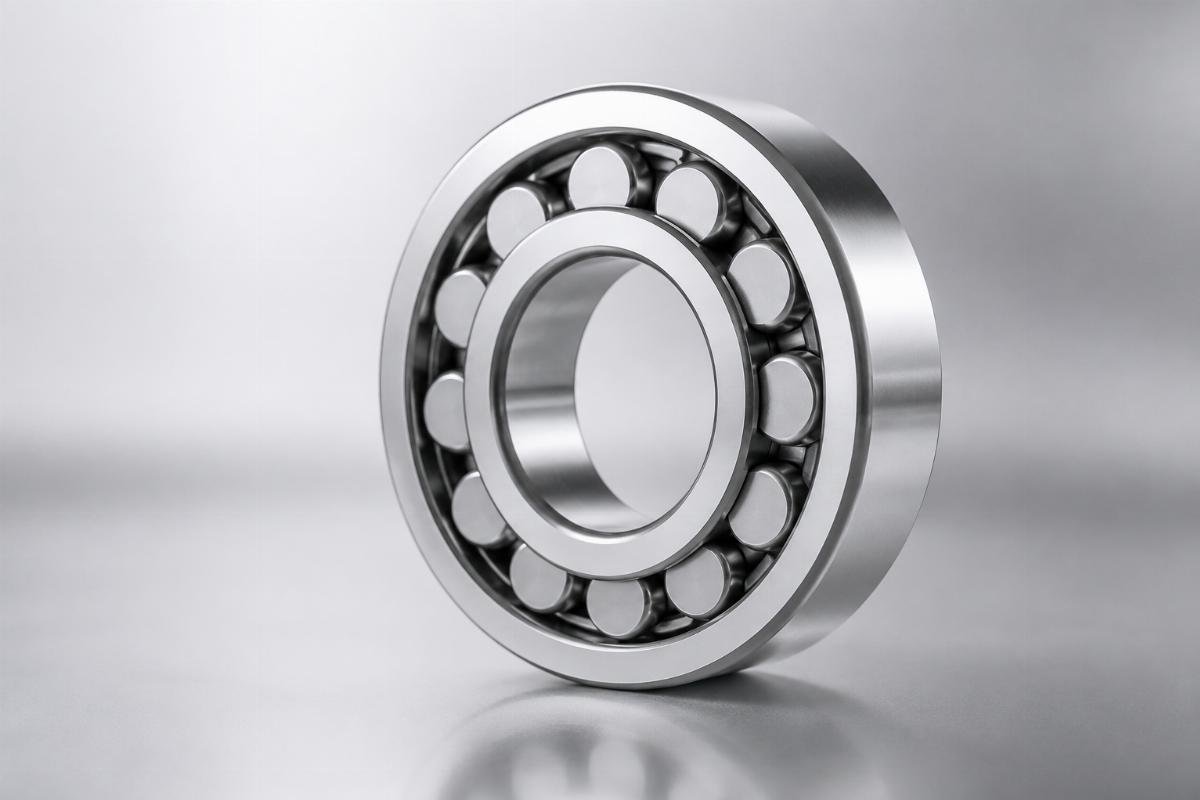
Ask which brand performs better and the honest answer starts with questions: what is actually running, how is it loaded, and what does failure look like. A supplier that carries compatible replacements across both designation families, with lot-level traceability and engineering support behind the match, is what keeps the right bearing in the right machine.
- Where SKF and FAG Bearings Actually Differ
- Choosing Between SKF and FAG for a Specific Machine
- Why a China-Based Supplier Can Be the More Reliable Source
- Final Take
Where SKF and FAG Bearings Actually Differ
Metallurgy and internal design give each brand an edge in particular environments. SKF is strongest where tolerances are tight and precision carries the application; FAG is notably good under shock load and in heavy cyclic duty. Those differences shift mean time to failure, and they shift total ownership cost in demanding plants.
| Performance Metric | SKF Industrial Bearings | FAG Industrial Bearings |
|---|---|---|
| Load Capacity | Up to 220 kN dynamic load rating in spherical roller designs | Up to 245 kN dynamic load rating in comparable sizes |
| Temperature Resistance | -40°C to +180°C standard; special grades to +350°C | -30°C to +200°C standard; X-life series to +220°C |
| Contamination Protection | Explorer series with triple-lip seals (IP66 rated) | High-performance seals with integrated dust deflectors |
| Precision Grades | P2 to P0 available; P4 standard for CNC applications | P5 to P0 available; P6 standard for heavy machinery |
| Fatigue Life | Extended L10 life in standard industrial applications | Substantially extended L10 life in comparable applications |
A steel mill in Southeast Asia makes the point concrete. Its hot rolling mill work roll bearings, specified as SKF 22230 spherical rollers, kept dropping out every four to six weeks at 160°C. The analysis showed that FAG 22230-E1-XL, with X-life heat-treated steel and a revised internal geometry, handled the thermal growth and shock of hot rolling better. With those bearings fitted and the lubrication schedule reworked, the mill ran fourteen weeks continuously — a step change in life that ended the recurring unplanned stops.
Practical selection narrows to four decisions:
- Material Selection – SKF Explorer for precision machinery with tight tolerance; FAG X-life for heavy duty with high shock load
- Sealing Systems – SKF triple-lip seals in wet service such as paper mills; FAG dust deflectors where mining dust is heavy
- Temperature Ratings – Above 200°C calls for SKF high-temperature grades; sustained 150-200°C suits FAG X-life
- Load Calculation – Check dynamic ratings against the duty using the maker's own engineering tools
Working with an established supplier that carries both designation families brings the documentation that makes a comparison real, so the choice is made on engineering merit, not on what happens to be in stock.
Choosing Between SKF and FAG for a Specific Machine
Application requirements should settle the question, not loyalty to a name. The most expensive bearing is poor value if it was never optimized for the duty in front of it. A methodical approach — matching load profile, speed range, contamination level and maintenance access to what the bearing can do — takes real cost out of ownership compared with a generic brand choice.
| Selection Factor | Common Mistake | Recommended Approach |
|---|---|---|
| Load Type | Assuming radial load capacity is sufficient | Calculate combined radial and axial load ratios using ISO 281 formulas |
| Operating Speed | Overspecifying precision grade | Match bearing precision (P0-P2) to actual shaft speed requirements |
| Environmental Conditions | Using standard seals in contaminated environments | Select application-specific sealing systems rated for contamination level |
| Maintenance Schedule | Choosing maintenance-free designs for critical equipment | Balance relubrication intervals with equipment accessibility |
| Cost Consideration | Focusing on initial purchase price | Calculate TCO including installation, maintenance, and downtime costs |
An Australian mining company shows what poor selection costs. Its crusher was failing monthly on standard SKF 23156 CA/W33 spherical rollers. Engineering analysis pinned the duty down: a shaft speed of 900 RPM, a radial load of 185 kN, and heavy dust from iron ore. The SKF unit had ample radial capacity, but FAG 23156 E1A-M offered noticeably better shock resistance and a reinforced cage that suited the crusher's stop-start operation. Specifying the FAG Superagriseal system around it pushed life out to four and a half months and cut lubrication demand substantially.
The selection sequence runs in order:
- Conduct Load Analysis – Measure the real radial and axial loads with strain gauges or the maker's load calculator
- Evaluate Operating Conditions – Record temperature range, contamination level and speed variation across a normal shift
- Review Maintenance Access – Judge how often relubrication or a swap can happen without stopping production
- Compare Technical Specifications – Set bearing capability against measured parameters using maker data sheets
- Calculate TCO – Put installation, maintenance and downtime impact into the decision, not just unit price
A supplier who knows both lines supports that work with cross-reference documents, application engineering data and batch-specific certificates, which is what turns a comparison into a decision instead of a guess.
Why a China-Based Supplier Can Be the More Reliable Source
Certification and traceability matter more than geography. The idea that Chinese suppliers deal mainly in counterfeits ignores the quality systems established operations actually run. A certified business holding ISO 9001 and IATF 16949 keeps full batch traceability on every consignment, with dimensional inspection, holographic label checks and a complete material certification package ready for audit.
| Authentication Method | Certified SKF and FAG Supplier China | Unvetted Regional Distributor |
|---|---|---|
| Traceability Documentation | Full batch traceability with original factory COO and material test reports | Often limited to generic certificates without batch-specific data |
| Physical Verification | Dimensional inspection using calibrated equipment with micron-level tolerance | Visual inspection only in most cases |
| Anti-Counterfeit Technology | Holographic label verification through manufacturer databases | Rarely utilizes manufacturer verification systems |
| Quality Control Process | Comprehensive incoming inspection before warehousing | Spot checks only, typically a small fraction of inventory |
| Warranty Support | Full manufacturer-backed warranty with claims processing support | Limited or ambiguous warranty terms |
A European wind energy asset manager needed angular contact ball bearings in the FAG B7030-E-T-P4S designation for gearbox repairs. Authenticity was the worry: counterfeit parts had already destroyed one gearbox and left a repair bill in the mid six figures. Verification covered the two-dimensional data matrix code checked against the manufacturer's central database, dimensional analysis of the critical raceway dimensions, and the whole material pack, heat treatment records included. The units shipped with traceability showing production at the original factory, condition monitoring later confirmed performance matching the original equipment, and the account grew into a supply agreement covering the whole turbine fleet.
That authentication framework stands on four pillars:
- Batch-Level Traceability – Every consignment carries lot numbers checkable against maker records, with origin certificates and test reports attached
- Precision Inspection – Batch-by-batch dimensional checks confirm conformance to the specified precision class (P0, P6, P5, P4) and clearance group (C2, CN, C3, C4)
- Rare Sizes – Deep stock of large-bore sizes, unusual precision classes, ceramic and stainless types allows rapid dispatch where a factory order runs to months
- Custom Builds – Laser marking, private-label packing, pre-lubrication and translated documentation for OEM and project work
A verified source removes the authenticity risk that unvetted channels carry. International certification, batch traceability and technical support together mean the part that arrives is the part on the sheet, and that it lasts in the application it was chosen for.
Final Take
Choosing between SKF and FAG is an engineering question, not a brand one. Both lines meet international quality standards, but their design philosophies give each line a different edge in precision work and under shock load. Matching the technical specification to the real duty — load profile, temperature range, contamination level — takes meaningful cost out of ownership. Verification through traceable, certified supply then makes sure the performance on paper is the performance in the plant, wherever the bearing was made.
Interchange Precision Spec
Key Technical Points
Super-Precision Bearing
DIN 620 / ISO 492
Typical class P2
7020-C-T-P4S
● Compatible replacements for FAG/Schaeffler-series interchange · ● Shockproof packing with vibration control · ● Quotation with DIN-conformity certification within 24 hours
Quotation for P4/P2 grades delivered in 24 hours.
Share the bearing model or send a technical drawing; the application engineers reply with stock position, lead time and our recommended configuration.
Phone line
+852 9554 0048
Tagged topics
Need a quote for a specific bearing designation? Our engineers reply within one business day.
Request a quote